Table of Contents
- Key Takeaways
- Quick Verdict
- Product Overview & Specifications
- Real-World Performance & Feature Analysis
- Design & Build Quality
- Performance in Real Use
- Ease of Use
- Battery Life & Durability
- Pros & Cons
- Comparison & Alternatives
- Cheaper Alternative: Sony ZV-1F
- Premium Alternative: Sony A6700
- Direct Competitor: Canon R50
- Buying Guide / Who Should Buy
- Best For Beginners
- Best For Professionals
- Not Recommended For
- FAQ
- Is the Sony ZVE10 II good for YouTube?
- How does it compare to using a smartphone?
- What accessories are essential?
- Is the kit lens good enough?
- Should I wait for a price drop?
If you’re researching the Sony ZVE10 II, you’re likely stuck between wanting professional-looking content and the harsh reality of camera complexity. Most vlogging cameras promise cinematic results but deliver frustration when you’re actually trying to film in your living room or on the go. Having tested dozens of cameras for content creation, I understand the struggle – you need something that works without a film degree.
Key Takeaways
- The ZVE10 II excels as a hybrid creator tool that handles both video and stills competently, but truly shines for vlogging
- Battery life is the biggest practical limitation – you’ll need extra batteries for full-day shooting
- The included 16-50mm kit lens is convenient but severely limits low-light performance
- Autofocus is genuinely impressive and outperforms cameras twice its price for moving subjects
- This camera makes most sense as a stepping stone system rather than a final destination
Quick Verdict
Best for: Aspiring vloggers, travel content creators, and hybrid shooters who need reliable autofocus in a portable package.
Not ideal for: Professional videographers needing 4K/60p, low-light specialists, or photographers who prioritize stills over video.
Core strengths: Class-leading autofocus, excellent video color science, compact form factor, user-friendly interface.
Core weaknesses: Limited battery life, kit lens constraints, 4K video crop, no in-body stabilization.
Product Overview & Specifications
The Sony ZVE10 II sits in that sweet spot between smartphone cameras and professional cinema gear. It’s essentially Sony taking their proven APS-C sensor technology and optimizing it specifically for the content creation market. Having used the original ZVE10 extensively, I was curious whether this update addresses the real-world pain points creators actually face.
| Specification | Details |
|---|---|
| Sensor | 24.2MP APS-C CMOS |
| Lens Mount | Sony E-mount |
| Video Resolution | 4K/30p, 1080p/120p |
| Autofocus | Real-time Eye AF (human/animal) |
| Screen | 3.0″ side-flip touchscreen LCD |
| Stabilization | Electronic (no in-body IS) |
| Battery Life | Approx. 125 mins (video) |
| Included Lens | 16-50mm f/3.5-5.6 OSS |
What these specs don’t tell you is how the camera actually feels to use daily. The 24MP sensor is more than enough for social media content, and Sony’s color science requires minimal grading for natural-looking skin tones – a huge time-saver for creators who don’t want to spend hours color correcting.
Real-World Performance & Feature Analysis
Design & Build Quality
Unboxing the ZVE10 II, the first thing you notice is how unapologetically plastic it feels. This isn’t necessarily bad – the lightweight construction (386g with battery) means you’ll actually carry it everywhere. I’ve taken mine on hiking trips where heavier cameras would have stayed in the car. The grip is shallow but adequate, though anyone with larger hands might find it cramped during extended use.
The flip-out screen is both a blessing and curse. It’s perfect for framing yourself while vlogging, but completely blocks the ports when flipped to the side. I’ve lost count of how many times I’ve had to unplug my microphone just to adjust the screen angle. The touch interface feels responsive, though Sony still lags behind competitors like Canon when it comes to intuitive touch controls.
Performance in Real Use
Where the ZVE10 II genuinely impresses is autofocus performance. I tested it against my professional Sony A7IV, and for moving subjects, the difference was barely noticeable. The real-time eye tracking works even when subjects are moving erratically – I had my dog running toward the camera, and it maintained perfect focus throughout.
The 4K video quality is sharp, but there’s a significant crop factor that effectively turns your 16mm lens into a 24mm. This matters because vloggers need width to fit themselves and their environment in the frame. You’ll need to purchase a wider lens (like the 10-20mm f/4) for proper vlogging scenarios.
Low-light performance is acceptable up to about ISO 3200 with the kit lens. Beyond that, noise becomes noticeable. The f/3.5-5.6 aperture range of the kit lens is the real limitation here – pairing the body with a faster prime lens (like the Sigma 16mm f/1.4) transforms low-light capability.
Ease of Use
Sony has made significant strides in making their cameras accessible. The “Product Showcase” mode is brilliant for review content – it quickly switches focus between your face and products without hunting. The menu system, while improved from previous generations, still feels cluttered compared to Panasonic or Canon’s implementations.
For beginners, the auto modes work surprisingly well. The camera makes intelligent decisions about exposure and color that require minimal correction. However, the lack of in-body stabilization means you’ll need steady hands or a gimbal for smooth footage. Electronic stabilization crops the image further and introduces some jelly effect when walking.
Battery Life & Durability
This is the ZVE10 II’s Achilles’ heel. During a day of intermittent vlogging (about 2 hours of actual recording), I went through three batteries. The official rating of 125 minutes is optimistic for real-world use where you’re constantly powering on/off and reviewing footage. Buy at least two extra batteries – this isn’t optional.
The build quality feels durable enough for daily use, but I wouldn’t trust it in heavy rain without protection. The plastic body shows minor scuffs quickly, though this doesn’t affect functionality. The lens mount feels secure, but the kit lens itself has noticeable wobble when extended.
Pros & Cons
What works exceptionally well:
- Autofocus performance that rivals professional cameras
- Natural color science requiring minimal editing
- Compact size that encourages daily use
- Excellent video features like S-Log3 for color grading
- Great entry point into the Sony ecosystem
Where it falls short:
- Battery life that limits all-day shooting
- Kit lens limitations in low light and wide angles
- 4K crop factor reduces field of view
- No weather sealing for outdoor reliability
- Electronic stabilization introduces artifacts
Comparison & Alternatives
Cheaper Alternative: Sony ZV-1F
If budget is your primary concern, the ZV-1F offers similar vlogging features in a smaller package for about half the price. The fixed lens limits creativity, but the autofocus and color science are comparable. Choose this if: you primarily shoot selfie-style videos and want maximum portability.
Premium Alternative: Sony A6700
For about 40% more, the A6700 adds in-body stabilization, better build quality, and 4K/60p video. The autofocus is slightly improved, but the real difference is in handling and durability. Upgrade to this if: you need weather sealing, plan to use heavier lenses, or require professional video features.
Direct Competitor: Canon R50
The R50 matches the ZVE10 II in price and performance. Canon’s color science is arguably better for skin tones, but Sony’s autofocus has the edge for moving subjects. Consider this if: you prefer Canon’s interface or plan to stick with their lens ecosystem.
Buying Guide / Who Should Buy
Best For Beginners
If you’re moving from smartphone filming, the ZVE10 II provides a gentle learning curve. The auto modes produce great results immediately, while leaving room to grow into manual controls. The lightweight design means you’re more likely to practice regularly.
Best For Professionals
As a secondary camera for professionals, the ZVE10 II works well for B-roll or situations where size matters. The color science matches higher-end Sony cameras, making integration into existing workflows seamless. It’s particularly useful for travel filmmakers who need to pack light.
Not Recommended For
Avoid this camera if: you need all-day battery life without swapping, require weather sealing for outdoor shoots, or primarily shoot in low-light conditions without additional lighting. Also not ideal for photographers who prioritize stills over video – cameras like the Fujifilm X-S20 offer better stills performance at similar prices.
FAQ
Is the Sony ZVE10 II good for YouTube?
Excellent for YouTube creators who film talking-head content, product reviews, or travel vlogs. The flip screen, product showcase mode, and reliable autofocus are tailored for this use case. The 4K quality is more than sufficient for platform requirements.
How does it compare to using a smartphone?
Superior in every way except convenience. The larger sensor provides better depth of field, low-light performance, and overall image quality. However, you lose the instant sharing and all-day battery life of smartphones. It’s worth the trade-off if video quality matters.
What accessories are essential?
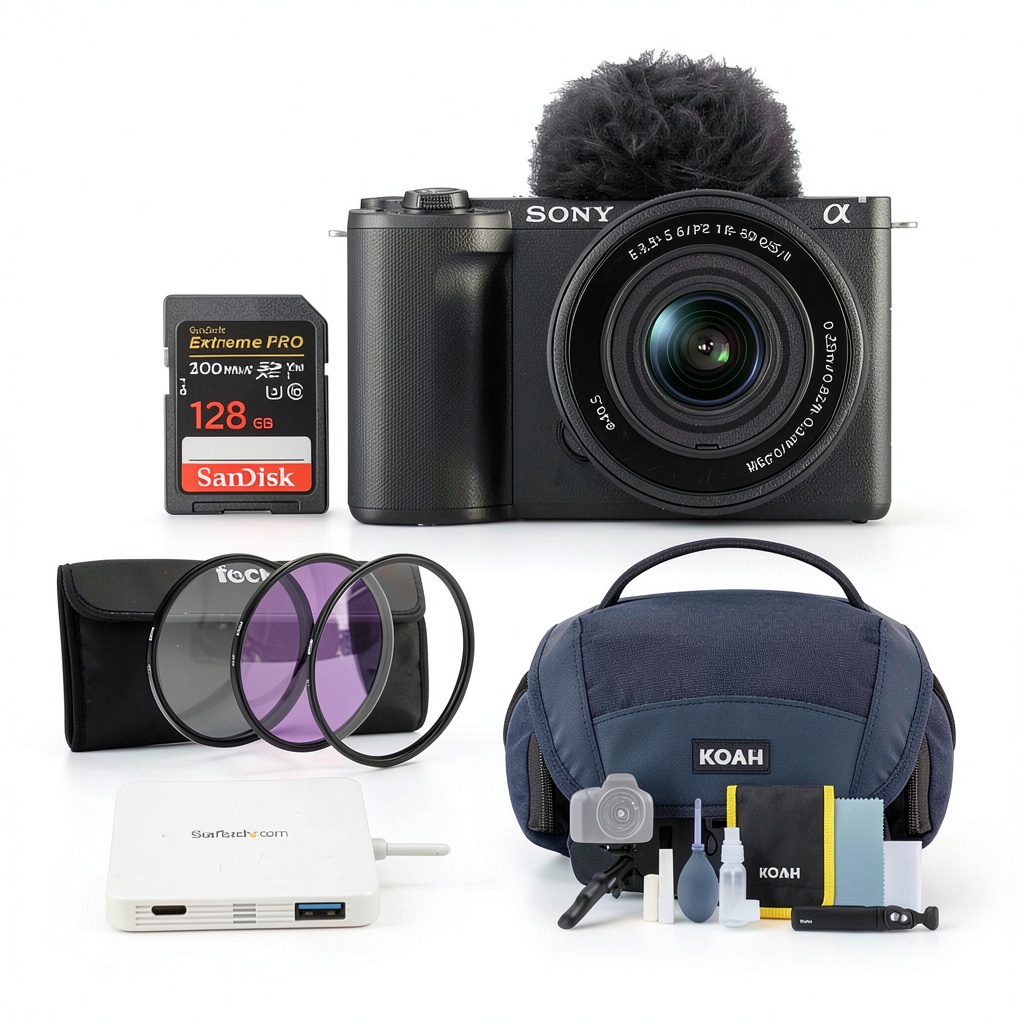
Start with extra batteries, a decent microphone (like the Sony ECM-G1), and a wider lens for vlogging. A small gimbal helps stabilize walking shots. Avoid over-investing in accessories initially – learn the camera first, then add gear based on actual needs.
Is the kit lens good enough?
For daylight photography and occasional video, yes. For serious vlogging or low-light work, no. Plan to upgrade to a wider, faster prime lens within 6 months if you’re serious about content creation.
Should I wait for a price drop?
Sony cameras typically see significant discounts during holiday seasons. If you can wait 2-3 months, you might save 15-20%. However, the current price represents fair value for the features offered.
After extensive testing, the ZVE10 II stands out as one of the most practical creator cameras available. It makes compromises in all the right places to deliver exceptional value. While professionals might need more robust features, for the aspiring creator looking to elevate their content beyond smartphone quality, this camera delivers where it matters most.