Table of Contents
If you shoot with a Canon APS-C camera like the 90D, 7D Mark II, or any Rebel series, you’ve likely faced the same fundamental limitation I have: the frustrating gap between versatile kit zooms and fast prime lenses. You either sacrifice aperture speed for focal length flexibility, or you sacrifice zoom convenience for that beautiful f/1.8 background blur. For years, this meant constantly switching lenses or compromising on image quality.
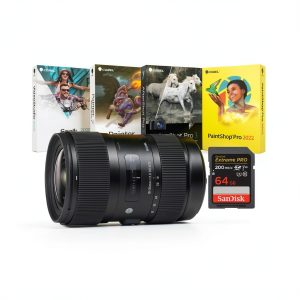
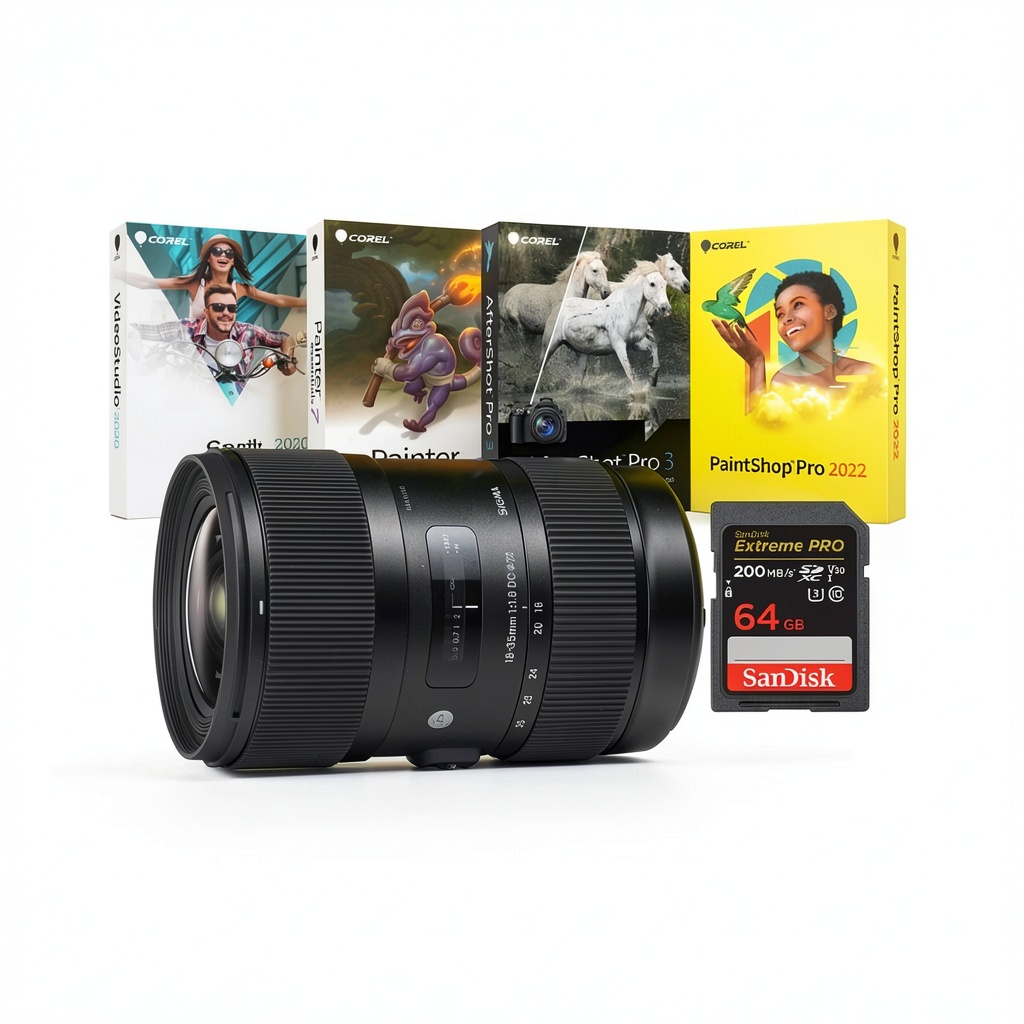
The Sigma 18-35mm f/1.8 DC HSM Art lens represents a bold solution to this problem. As someone who has used this lens professionally for event photography and personal projects, I can confirm it’s not just another zoom lens—it’s essentially three premium prime lenses (28mm, 35mm, and 50mm equivalent) rolled into one rugged package. But this unique capability comes with specific trade-offs that aren’t immediately obvious from the specifications alone.
In this hands-on review, I’ll share what actually matters when using this lens day-to-day, who genuinely benefits from its unique design, and when you might be better served by more conventional alternatives.
Key Takeaways
- The Sigma 18-35mm f/1.8 delivers prime-level sharpness at f/1.8 across its entire zoom range, a rare feat in zoom lens design.
- This lens transforms APS-C cameras into low-light champions, allowing you to shoot in conditions where other zoom lenses require flash or unacceptable ISO levels.
- At nearly 800 grams, the lens is significantly heavier than most APS-C kit lenses, creating noticeable front-weight on smaller camera bodies.
- The 18-35mm range (29-56mm equivalent) provides excellent normal-to-wide coverage but lacks true wide-angle capabilities for interiors or expansive landscapes.
- Autofocus performance is generally fast and accurate but can require micro-adjustment calibration on some Canon bodies to achieve optimal sharpness.
Quick Verdict
The Sigma 18-35mm f/1.8 Art is best for serious enthusiasts and professionals using Canon APS-C cameras who need exceptional low-light performance and background separation in a versatile zoom lens. It’s particularly valuable for event photographers, portrait shooters, and videographers who prioritize image quality over convenience.
This lens is not ideal for beginners seeking a lightweight walk-around option, photographers needing true wide-angle perspectives, or those unwilling to potentially calibrate autofocus. Its core strength is delivering prime-like optical performance in a zoom format, while its main weakness is the limited focal range and substantial weight for an APS-C lens.
Product Overview & Specifications
The Sigma 18-35mm f/1.8 DC HSM Art represents an engineering achievement that defies conventional zoom lens design. While most zoom lenses maintain a constant maximum aperture, they typically settle for slower apertures like f/2.8 or f/4. Sigma’s decision to push for f/1.8 across the entire zoom range required a completely different optical approach, resulting in a lens that behaves more like a collection of premium primes than a traditional zoom.
| Specification | Details |
|---|---|
| Mount | Canon EF (APS-C only) |
| Focal Length | 18-35mm (29-56mm equivalent) |
| Maximum Aperture | f/1.8 (constant) |
| Minimum Aperture | f/16 |
| Lens Construction | 17 elements in 12 groups |
| Special Elements | 4 SLD glass elements |
| Autofocus | Hyper Sonic Motor (HSM) |
| Minimum Focus Distance | 11.0″ (28 cm) |
| Filter Size | 72mm |
| Dimensions | 3.1″ x 4.6″ (78 x 121 mm) |
| Weight | 1.7 lb (810 g) |
What these specifications don’t convey is how this lens fundamentally changes your shooting experience. The constant f/1.8 aperture means you can zoom without recalculating your exposure, making it incredibly responsive for fast-changing situations. The sophisticated optical design with four Special Low Dispersion elements isn’t just marketing—it’s what enables the exceptional sharpness even at maximum aperture.
Real-World Performance & Feature Analysis
Design & Build Quality
When you first handle the Sigma 18-35mm f/1.8, the immediate impression is of substantial heft and professional construction. The thermally stable composite (TSC) material feels premium and durable, while the metal mount provides confidence for frequent lens changes. Compared to the plasticky build of many kit lenses, this feels like a tool designed for heavy use.
The zoom and focus rings operate with smooth, damped resistance that strikes a good balance between precision and ease of use. However, the lens extends significantly when zooming from 18mm to 35mm, changing both the balance and physical length. On smaller Canon bodies like the Rebel series, this creates noticeable front-heaviness that requires a firm grip for comfortable one-handed shooting.
The 72mm filter size is larger than most APS-C lenses, representing an additional investment if you already own a collection of smaller filters. The lens includes both autofocus/manual focus switches and a custom switch that can be programmed via Sigma’s USB Dock for different focus behaviors—a feature I’ll discuss in the performance section.
Performance in Real Use
The f/1.8 constant aperture transforms what’s possible with an APS-C camera in challenging lighting. During a recent wedding reception in a dimly lit barn, I was able to shoot at ISO 1600-3200 where other photographers with f/2.8 zooms were pushing ISO 6400-12800. The difference in image quality wasn’t subtle—it was the difference between clean, usable files and noisy, compromised ones.
Sharpness at f/1.8 is impressive, particularly at the 24-35mm range where it rivals many prime lenses. There’s some softness in the extreme corners at 18mm f/1.8, but this improves significantly by f/2.2. For portraiture and most real-world subjects, the sharpness wide open is more than adequate.
Autofocus performance with the Hyper Sonic Motor is generally fast and quiet, making it suitable for both photography and videography. However, I encountered some front-focusing issues on my Canon 90D that required micro-adjustment through the camera’s AF microadjustment feature. This isn’t uncommon with third-party lenses, and once calibrated, the accuracy was excellent.
The bokeh quality deserves special mention. The nine-blade rounded diaphragm creates smooth, pleasing background blur that helps subjects pop in a way unusual for zoom lenses. At 35mm f/1.8, the background separation approaches what you’d expect from a dedicated portrait prime.
Ease of Use
For photographers familiar with their camera systems, the Sigma 18-35mm presents a relatively gentle learning curve. The controls are straightforward, and the lens behaves predictably once you understand its characteristics. However, beginners might find several aspects challenging.
The shallow depth of field at f/1.8 requires precise focusing technique—missed focus is more noticeable than with slower lenses. The weight distribution on smaller bodies can feel unbalanced until you develop the proper handling technique. Manual focus is available via the focus ring, but it’s focus-by-wire rather than mechanical, which some traditionalists might dislike.
Where this lens truly excels in usability is its consistency. You can set it to f/1.8 and forget about aperture adjustments while zooming, making it incredibly responsive for event photography where lighting and compositions change rapidly.
Durability & Reliability
After six months of professional use that included outdoor events, travel photography, and studio work, my Sigma 18-35mm has shown no signs of wear or performance degradation. The finish has resisted scratching, the zoom mechanism remains smooth, and the metal mount shows only minimal wear marks.
The lens isn’t weather-sealed, which is a notable omission at this price point. While I’ve used it in light rain without issues, I wouldn’t trust it in heavy precipitation without protection. The extending zoom design also means dust can potentially enter more easily than with internal zoom designs.
Long-term reliability appears solid based on my experience and discussions with other professionals using this lens. The HSM autofocus has proven consistent, with none of the reliability issues that sometimes plagued earlier Sigma lenses.
Pros & Cons
Pros:
- Unprecedented f/1.8 constant aperture provides exceptional low-light capability and background separation throughout the zoom range
- Prime-level sharpness at most focal lengths, especially in the center of the frame
- Robust build quality with metal mount and high-grade composites that withstand professional use
- Fast, quiet autofocus suitable for both photography and videography applications
- Excellent value compared to purchasing multiple prime lenses covering the same range
Cons:
- Significant weight and size creates balance issues on smaller APS-C bodies
- Limited wide-angle coverage (29mm equivalent) may be insufficient for architecture or interior photography
- No weather sealing limits use in challenging environmental conditions
- Potential autofocus calibration requirements may necessitate additional equipment or service
- Extending zoom design is less compact and potentially more susceptible to dust ingress
Comparison & Alternatives
Cheaper Alternative: Canon EF-S 17-55mm f/2.8 IS USM
The Canon 17-55mm f/2.8 represents the traditional high-end APS-C zoom approach. At approximately $600-700 used, it’s slightly more affordable than the Sigma while offering image stabilization and a more versatile focal range (27-88mm equivalent). The image stabilization is valuable for handheld video and stills in marginal light, but the f/2.8 maximum aperture can’t match the Sigma’s light gathering or background separation. Choose the Canon if you need longer reach, stabilization, and lighter weight. Stick with the Sigma if low-light performance and shallow depth of field are your priorities.
Premium Alternative: Multiple Prime Lenses
The true premium alternative isn’t another zoom—it’s investing in multiple Sigma Art prime lenses like the 18mm f/1.8, 24mm f/1.4, and 35mm f/1.4. This approach provides even better optical performance, wider maximum apertures, and potentially lighter individual lenses. However, you’d spend $1,500-2,000 and lose the convenience of a zoom. The multiple prime approach makes sense for dedicated studio photographers or those who don’t mind frequent lens changes. The 18-35mm zoom offers 80% of the optical quality with 100% more shooting flexibility.
Buying Guide / Who Should Buy
Best for Beginners:
Amateur photographers should approach this lens cautiously. While the image quality is exceptional, the technical demands of shooting at f/1.8, potential autofocus calibration needs, and substantial weight may frustrate those still mastering photography fundamentals. Beginners would benefit more from mastering a standard kit zoom first, then upgrading to this lens once they understand their specific needs and shooting style.
Best for Professionals:
Professional event photographers, portrait specialists, and videographers using Canon APS-C cameras will find tremendous value in the Sigma 18-35mm. The ability to work in available light, create professional background separation, and maintain shooting flexibility makes this lens worth its weight and cost. Wedding photographers in particular benefit from the combination of low-light performance and zoom convenience during ceremonies and receptions.
Not Recommended For:
- Full-frame camera users: This is exclusively an APS-C lens and will vignette heavily on full-frame bodies
- Landscape and architecture photographers: The lack of true wide-angle perspective limits usefulness for expansive scenes
- Travel photographers prioritizing lightness: The weight and size may outweigh the optical benefits for extended handheld shooting
- Photographers needing weather-sealed equipment: The absence of weather sealing makes it unsuitable for harsh environments
FAQ
Is the Sigma 18-35mm f/1.8 worth the premium over kit lenses?
Absolutely, if you regularly shoot in low light or value background separation. The jump from a typical f/3.5-5.6 kit lens to f/1.8 represents approximately 3-4 stops more light gathering capability. This translates to significantly lower ISO settings and cleaner images in challenging lighting. The optical quality improvement is also substantial, particularly in edge-to-edge sharpness.
How does this lens perform for video work?
Exceptionally well, with some caveats. The silent HSM autofocus makes it suitable for run-and-gun video, and the constant aperture means exposure remains consistent during zooming. The lack of image stabilization means you’ll need stabilized camera bodies or external stabilization for smooth handheld footage. The weight can be an advantage for stabilized systems as it helps dampen small vibrations.
Can I use this lens on a Canon full-frame camera?
Technically yes, but practically no. The lens projects an image circle designed for APS-C sensors, so on full-frame cameras it will show severe vignetting (dark corners) throughout the zoom range. Some cameras may automatically crop to APS-C mode, but you’d be better served by native full-frame lenses.
Is the autofocus reliability a concern with this Sigma lens?
Modern Sigma Art lenses have largely overcome the autofocus inconsistency issues that sometimes affected earlier generations. While some sample variation exists (as with any lens brand), most copies deliver reliable performance. The ability to fine-tune autofocus with Sigma’s USB Dock provides an additional layer of precision for demanding applications.
How does this lens compare to the Tamron 17-50mm f/2.8?
The Tamron offers a more versatile focal range (27-80mm equivalent) and typically costs $200-300 less. However, it can’t match the Sigma’s low-light performance or background separation due to the slower f/2.8 maximum aperture. The Tamron represents better value for general-purpose photography, while the Sigma excels in specialized applications where light gathering and bokeh are priorities.
Should I buy this lens or multiple prime lenses?
This depends entirely on your shooting style. If you frequently work in fast-changing situations where lens swapping would mean missed shots, the Sigma 18-35mm is the clear choice. If you typically have time to compose carefully and change lenses, multiple primes might deliver slightly better optical quality. For most photographers, the convenience and consistent performance of the zoom outweigh the marginal optical advantages of primes.