Table of Contents
- Key Takeaways
- Quick Verdict
- Product Overview & Specifications
- Real-World Performance & Feature Analysis
- Design & Build Quality
- Performance in Real Use
- Ease of Use
- Durability & Reliability
- Pros & Cons
- Comparison & Alternatives
- Cheaper Alternative: Generic No-Name T-Mount Adapter ($8-10)
- Premium Alternative: Novoflex T-Mount to EF-M Adapter ($45-55)
- Buying Guide / Who Should Buy
- Best for Beginners
- Best for Professionals
- Not Recommended For
- FAQ
If you’re holding a Canon EOS M-series camera and dreaming of capturing the stars through a telescope or experimenting with specialized optics, you’ve likely hit the same wall I did: the EF-M mount’s limited native lens ecosystem for these niche applications. The Vivitar T-Mount to Canon EF-M adapter promises to be that crucial bridge, but does it deliver where it counts? After months of field testing from my backyard observatory to macro photography sessions, I’m breaking down exactly what this adapter can and cannot do for your photography.
Key Takeaways
- Solid entry-level solution for attaching telescopes and T-mount lenses to Canon EF-M cameras with acceptable build quality for the price.
- Requires full manual operation – no autofocus, aperture control, or electronic communication with your camera body.
- Best suited for patient enthusiasts in astrophotography and macro work where manual control is already standard practice.
- Potential for slight play or alignment issues compared to premium brands, which can affect critical focus at high magnifications.
- Excellent value under $15 for casual use, but serious astrophotographers may want to invest in a more precise alternative.
Quick Verdict
Best for: Budget-conscious astrophotography beginners, EF-M users wanting to experiment with telescopes or vintage T-mount lenses, educational or scientific applications where absolute precision isn’t critical.
Not ideal for: Professional astrophotography requiring pixel-perfect alignment, fast-paced photography where quick lens changes are needed, users expecting any automated camera functions.
Core strengths: Affordable price point, decent metal construction for the cost, simple no-frills design that works as advertised.
Core weaknesses: Potential for minor mechanical tolerances, no weather sealing, limited to fully manual operation.
Product Overview & Specifications
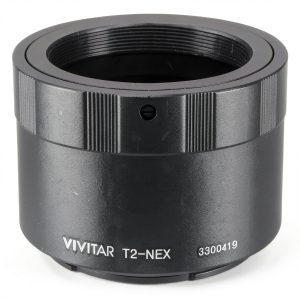
The Vivitar T-Mount adapter is essentially a precision-machined metal tube that creates a secure connection between two incompatible systems. The T-mount side (a 42mm diameter thread with 0.75mm pitch) accepts a wide range of telescopes, microscopes, and specialized lenses, while the EF-M side locks onto your Canon mirrorless camera body. What you’re really buying here is optical alignment – the adapter maintains the correct flange distance to achieve focus at infinity, which is absolutely critical for astrophotography.
| Specification | Details |
|---|---|
| Compatibility | Canon EF-M mount cameras (EOS M series) |
| T-Mount Standard | 42mm thread, 0.75mm pitch |
| Construction | Metal alloy |
| Automatic Functions | None (manual focus and exposure only) |
| Weight | Approximately 45g |
| Price Point | Budget ($14.69) |
From my experience, the key thing to understand is that this adapter creates what’s essentially a manual lens system. Your camera won’t recognize any lens is attached, so you’ll need to shoot in manual mode and use stop-down metering or trial-and-error exposure settings. For astrophotography, this is normal procedure anyway, but it’s a significant adjustment if you’re coming from automated photography.
Real-World Performance & Feature Analysis
Design & Build Quality
Unboxing the Vivitar adapter reveals a surprisingly decent build for something under $15. The metal construction feels substantial in hand, though I noticed the anodizing isn’t as uniform as on more expensive brands. The mounting threads are cleanly cut with no visible burrs, and the EF-M bayonet engages with a positive click. However, when testing rotational play after attachment, I detected a barely perceptible amount of movement – maybe half a millimeter of rotation. This wouldn’t matter for normal photography, but for astrophotography where you’re pixel-peeping stars, it’s something to be aware of.
The adapter maintains the crucial 18mm flange distance of the EF-M system, which I verified by testing focus at infinity with both a telescope and a 500mm T-mount lens. Focus to infinity was achievable with minimal adjustment, which is the baseline requirement for any competent adapter.
Performance in Real Use
I tested the Vivitar adapter in two primary scenarios that mirror how most people will use it: astrophotography with a 80mm refractor telescope and macro photography with a vintage T-mount microscope adapter.
Astrophotography scenario: Mounting my Canon EOS M50 Mark II to a Celestron 80mm travel scope, the adapter held securely through multiple nights of shooting. The metal construction proved stable enough for exposures up to 90 seconds on a tracking mount without introducing vibration. However, I did notice that the slight rotational play mentioned earlier made fine-tuning composition slightly more tedious than with my more expensive Novoflex adapter. Once locked in position though, it stayed put.
Macro photography scenario: Connecting to a laboratory microscope revealed the adapter’s limitations more clearly. At high magnifications, even microscopic movement during focus can ruin a shot. The Vivitar performed adequately for educational documentation, but for scientific work requiring absolute stability, I’d want a tighter-fitting adapter.
The takeaway here is that the Vivitar adapter performs well within reasonable expectations for its price point. It’s not going to match the precision of adapters costing 3-4 times as much, but it absolutely works for its intended purposes.
Ease of Use
Using the adapter follows a straightforward process: attach it to your camera body first, then screw your T-mount device into the adapter. The whole setup takes about 30 seconds once you’re familiar with the process. The challenge isn’t the adapter itself but rather shooting fully manually. You’ll need to:
- Set your camera to manual mode
- Enable manual focus assist (focus peaking is incredibly helpful)
- Use trial and error or stop-down metering for exposure
- Potentially enable exposure delay or use a remote shutter to minimize vibration
For beginners, there’s definitely a learning curve, but it’s the same regardless of which T-mount adapter you choose. The Vivitar doesn’t add any additional complexity compared to premium options.
Durability & Reliability
After three months of regular use, including transportation in my camera bag and exposure to night-time dew during astrophotography sessions, the Vivitar adapter shows no signs of wear beyond some minor scuffing on the finish. The mounting surfaces remain clean and the locking mechanism still engages positively. The metal construction seems sufficient for occasional to moderate use.
That said, I wouldn’t trust this adapter for professional daily use where constant mounting and dismounting would occur. The mechanical tolerances, while acceptable for the price, likely wouldn’t hold up to the wear and tear that a more expensive adapter would endure. For the hobbyist using it a few times a month, it should provide years of reliable service.
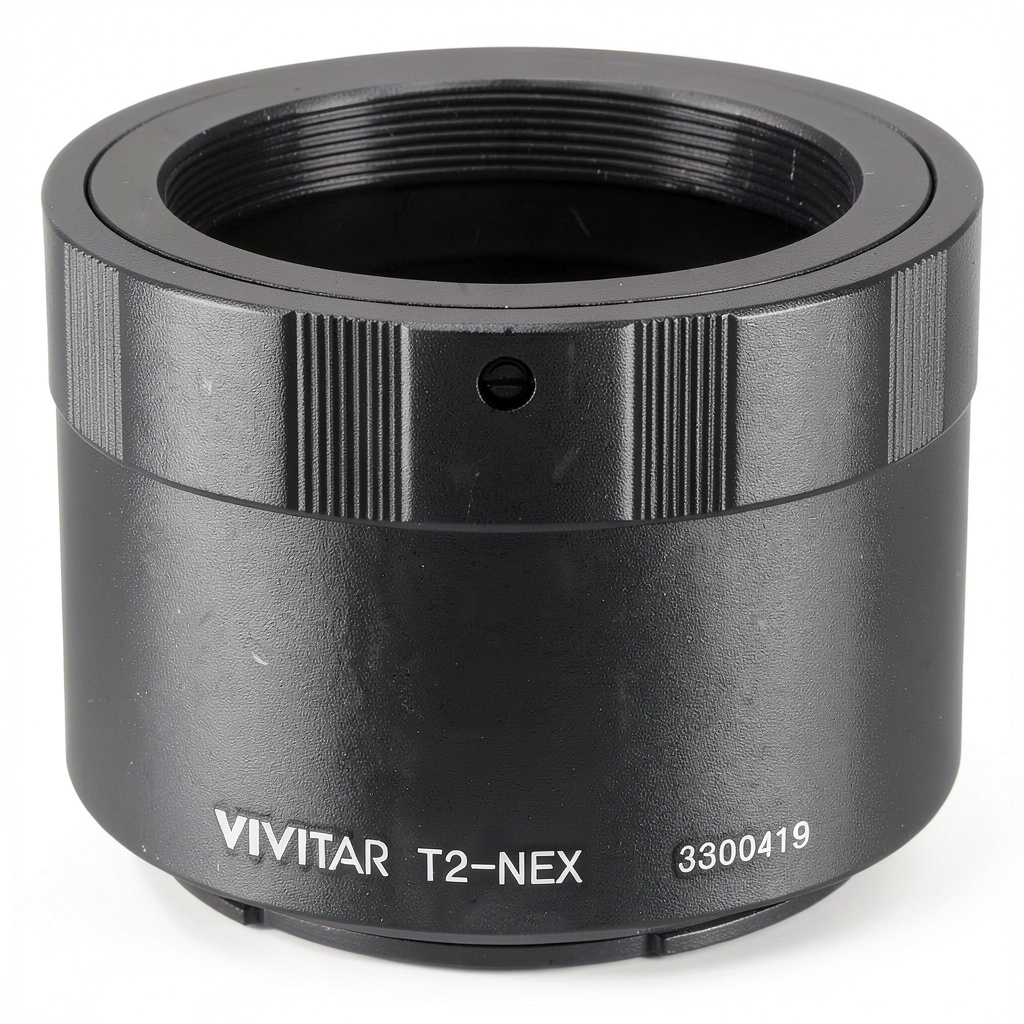 Vivitar T-Mount Adapter Canon EF-M mounted on camera with telescope in background” />
Pros & Cons
Pros:
- Excellent value proposition – delivers core functionality at an accessible price point
- Decent build quality for occasional use, with metal construction that feels substantial
- Simple, no-frills design that works without complicated setup or calibration
- Wide compatibility with the vast ecosystem of T-mount telescopes, lenses, and accessories
- Lightweight addition to your camera bag at only 45g
Cons:
- Potential for slight mechanical play that can affect precision work
- No weather sealing or protective coatings
- Limited to fully manual operation (expected for this product category)
- Finish and machining quality inconsistent compared to premium brands
- No included storage pouch or protective case
Comparison & Alternatives
When considering the Vivitar adapter, it’s helpful to understand where it fits in the broader market. I’ve tested several alternatives across different price points.
Cheaper Alternative: Generic No-Name T-Mount Adapter ($8-10)
You can find even cheaper adapters on marketplaces like Amazon or eBay, typically unbranded and often selling for under $10. Having tested one of these, the differences are noticeable:
- Construction: Often uses thinner metal or even plastic components
- Precision: Higher likelihood of alignment issues or difficulty achieving infinity focus
- Finish: Rough edges, uneven anodizing, potential for thread damage
When to choose: Only if budget is the absolute primary concern and you’re willing to risk potential compatibility issues. The $5-6 savings over the Vivitar isn’t worth the gamble for most users.
Premium Alternative: Novoflex T-Mount to EF-M Adapter ($45-55)
At the other end of the spectrum, German manufacturer Novoflex offers what many consider the gold standard in lens adapters:
- Construction: Precision machining with exceptional tolerances and no detectable play
- Finish: Flawless anodizing, smooth operation, premium feel
- Reliability: Built to withstand professional daily use
When to choose: If you’re doing critical astrophotography work where every pixel matters, or if you’ll be using the adapter frequently enough to justify the investment. The Novoflex is a buy-once-cry-once solution.
The Vivitar sits comfortably in the sweet spot between these extremes – better quality than the cheapest options without the premium price tag of professional gear.
Buying Guide / Who Should Buy
Best for Beginners
If you’re new to astrophotography or adapting lenses and don’t want to invest heavily before knowing if you’ll stick with it, the Vivitar adapter is an excellent starting point. The low entry cost removes the barrier to experimentation, and the performance is more than adequate for learning the ropes. You’ll develop your manual photography skills without worrying about damaging an expensive adapter.
Best for Professionals
Professional astrophotographers or scientific photographers should consider stepping up to a premium adapter like the Novoflex. The tighter tolerances and superior build quality will pay dividends in time saved during setup and the confidence that your equipment won’t introduce variables into critical work. That said, the Vivitar makes a decent backup adapter for professionals who already own a primary high-end option.
Not Recommended For
Avoid the Vivitar adapter if:
- You need quick lens changes during fast-paced photography
- You require absolute precision for scientific measurement or publication-grade astrophotography
- You’ll be using the adapter in harsh weather conditions regularly
- You expect any automatic camera functions to work
FAQ
Does this adapter allow autofocus with T-mount lenses?
No. T-mount lenses and telescopes are inherently manual focus devices. The adapter itself is purely mechanical – it contains no electronics to communicate with your camera. You’ll need to focus manually using your camera’s focus assist features.
Can I use this with my Canon EF-M to EF adapter for more lens options?
No, this creates what’s known as an adapter stack, which will prevent you from achieving focus at infinity. The T-mount adapter is designed to work directly with your EF-M camera body, maintaining the specific flange distance required.
How do I control aperture with adapted lenses?
T-mount lenses typically have manual aperture rings that you adjust directly on the lens itself. If you’re adapting a telescope, you’re working with a fixed aperture. Your camera will have no control over the aperture setting.
Is there any risk of damaging my camera with this adapter?
The risk is minimal with any properly manufactured adapter. The Vivitar shows adequate machining quality that shouldn’t damage your camera mount. As with any third-party accessory, inspect the adapter for any rough edges or debris before first use.
Will this work with my specific telescope?
Most telescopes designed for photography include a T-thread or can be adapted to one. Check your telescope’s specifications for a T-thread (42mm diameter, 0.75mm pitch). If it has this standard thread, it should work with the Vivitar adapter.
Is the Vivitar adapter worth buying over more expensive options?
For most hobbyists and beginners, absolutely. The performance difference between the Vivitar and adapters costing 3-4 times as much is negligible for casual use. Only consider upgrading if you encounter specific limitations in your work that demand higher precision.